Save Our Monarchs
  • Monarch Story
    • Why Milkweed?
    • Monarch Migration
    • Help Us Expand
    • How To Raise Monarch Butterflies At Home
    • How You Can Help
    • Frequently Asked Questions
  • Get Seeds
    • Seed Packets
    • Bulk Seeds
  • Donate
    • School Classroom Program
    • Nebraska/SOM
    • Donate Stock
    • In Memoriam
    • In Honor
  • Store
    • Milkweed Seeds
    • Save Our Monarchs Gear
    • Gift Cards
    • CLEARANCE!
  • Schools
  • Habitat Projects
    • Corridors For Pollinators
  • About Us
    • Our Team
    • Our Partners
    • Testimonials
    • Irvin & Gladys
    • Contact Us
  • Blog

Spotlight on Common Milkweed

1/21/2024

76 Comments


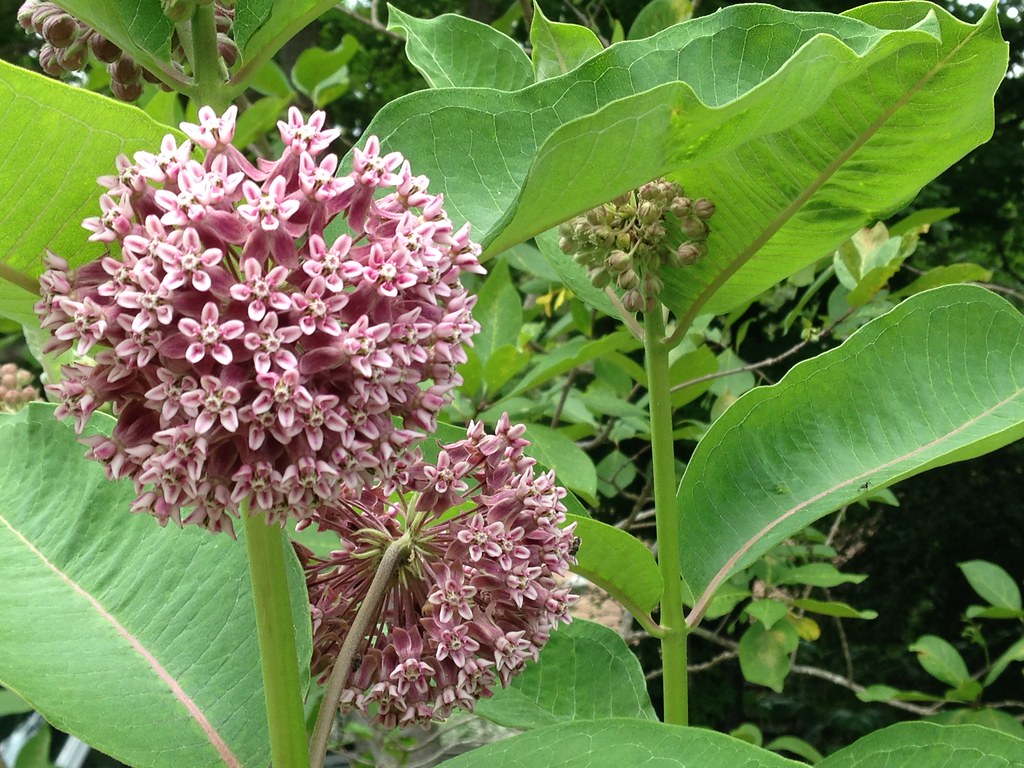
There are a number of reasons we love Common Milkweed (Asclepias syriaca) which is why we include them in almost all of our seed packets!
​
To name just a few: It is resilient, easy to grow, and Monarchs LOVE it.
We've compiled your FAQ into one article so we can help to answer all your questions about Common Milkweed!

Picture

Who feeds on Common Milkweed?

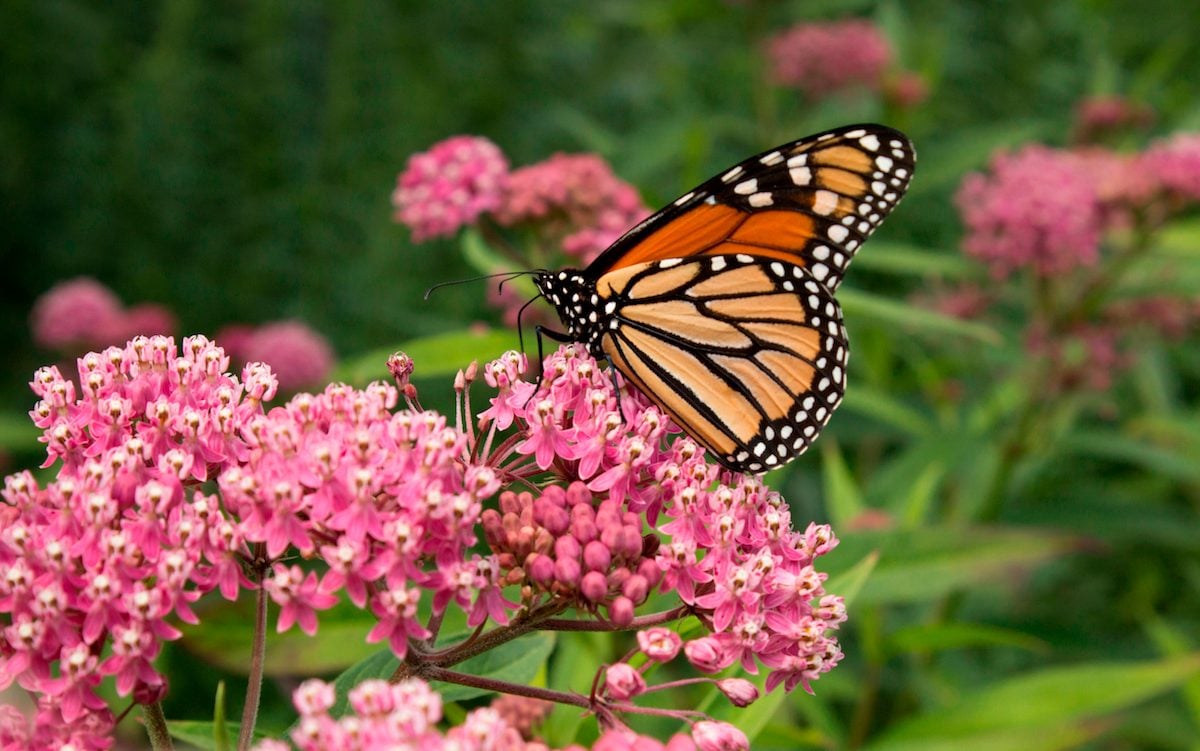
​It is among the most important food sources for monarch butterfly caterpillars (Danaus plexippus) in the northeastern and midwestern United States.
Not only does it benefit our beloved Monarch Butterflies, but more than 450 insect species feed on A. syriaca, including flies, beetles, ants, bees, wasps, and butterflies. 
Picture
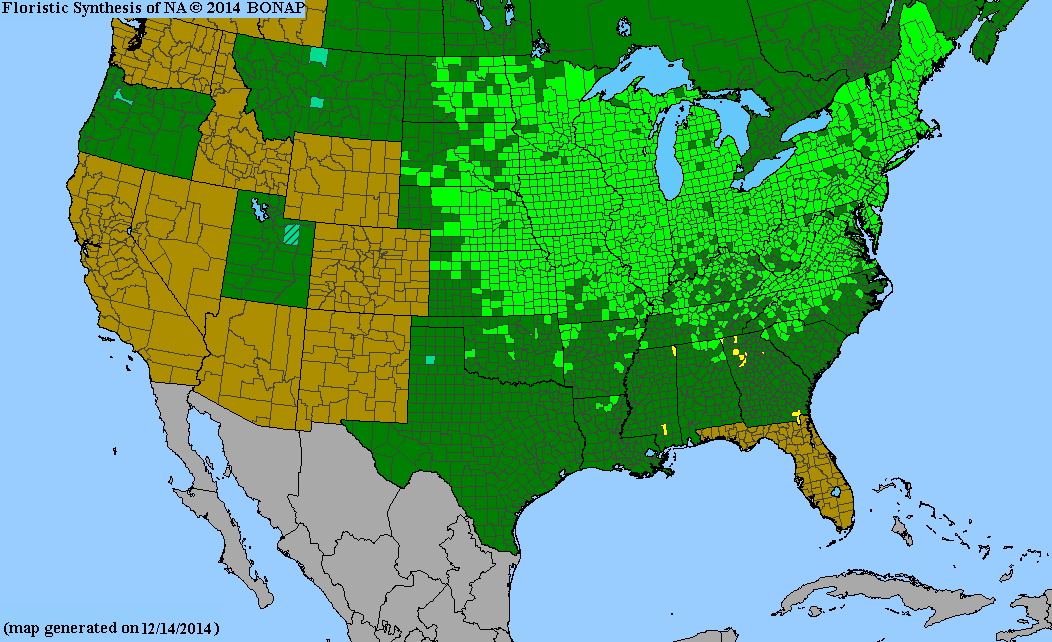
Refer to the above map by the Xerxes Society for a visual of Common Milkweed's Native Range. The dark green represents where it is native and commonly occurs. The bright green represents where it is reported to commonly occur naturally.

Where is Common Milkweed NOT Native?

It's easiest to start where Common Milkweed is NOT native since it's native range covers 39 US states and several Canadian provinces.

If you live in California, Colorado, Florida, Arizona, New Mexico, Idaho or, New Mexico or Nevada you should plant another species of milkweed that is native to your area.


It is important to learn which milkweeds are native to your region: please consult these milkweed range maps from the Biota of North America Program’s (BONAP) North American Plant Atlas. Once you have figured out which species of milkweed are native to your area, you can use the Milkweed Finder Tool to find out where to buy Milkweed seeds and plants. 

Where is Common Milkweed Native?

USA: AL , AR , CT , DC , DE , GA , IA , IL , IN , KS , KY , LA , MA , MD , ME , MI , MN , MO , MS , MT , NC , ND , NE , NH , NJ , NY , OH , OK , OR , PA , RI , SC , SD , TN , TX , VA , VT , WI , WV

Canada: MB , NB , NL , NS , ON , QC , SK
​
Native Distribution: Saskatchewan to New Brunswick; south to Georgia; west through Tennessee to Kansas and Iowa.

What kind of habitat does Common Milkweed prefer?

​Among the milkweeds, this species is the best at colonizing in disturbed sites. Within its range it can be found in a broad array of habitats from croplands, to pastures, roadsides, ditches and old fields.

It is surprisingly rare in prairies in the Midwest being found mostly in disturbed sites within these habitats. As an indigenous species of the southern Great Plains, it has all the attributes of what some ecologists call a “fugitive species”. That is, one whose appearance and persistence is dependent on disturbance due to its inability to compete with other vegetation. In the northern parts of its range it seems to be a more permanent member of the floral communities.

How do you grow Common Milkweed?

Fall Planting

Fall is the best time for planting milkweed seeds. The seeds won't germinate until spring because they require a cold stratification period. This process stops seedlings from emerging too soon and freezing in the winter cold. You can plant the seeds from September 1 up until the soil freezes. Prepare your soil by removing existing vegetation, if present, and loosen soil with a rake. You may want to add some compost, if you have any available. Scatter the seeds and use your rake to gently work them into the soil. They will come up in spring when conditions are right for them to grow.

Spring Planting 

Spring planting takes a little more work because you will need to mimic the natural freezing and thawing cycle. At least six weeks before you are going to plant the seeds in spring, obtain two paper towels, wet them and then wring out excess water. Place one of the paper towels inside a one-gallon, zip-close plastic bag. Scatter the milkweed seeds over this paper towel. Cover the seeds with the second damp paper towel. Zip the plastic bag closed and place it flat in your refrigerator. Leave it undisturbed for at least six weeks. When you are ready to plant, prepare the soil by removing existing vegetation, if present, and loosen soil with a rake. You may want to add some compost, if you have any available. Scatter the seeds and use your rake to gently work them into the soil. When they come up, keep the soil moist until the plants are well established.

How do you identify Common Milkweed?

Please refer to my blog on How to Identify Milkweed Quickly and Confidently. This blog describes how to identify milkweed using the Pattern's method. 
​
In a nutshell, milkweed can be spotted by secreting a milky sap (except for Butterfly Milkweed) and opposite or sometimes whorled leaves. There are 5 separate sepals (petal-like leaves) and 5 fused petals. The corona (circle of petals around the center of the flower) contains 5 hooded forms facing inwards. Inside the corona there are 5 stamens (male parts) fused to the ovary (female part). The pods are filled with many seeds with silky tufts. 

If you have any other milkweed-related questions, don't hesitate to reach out to us! I can be contacted at [email protected] or you can comment below.

Resources

Growing Common Milkweed Plants
https://dnr.illinois.gov/education/atoz/seedinstr.html

Xerxes Society
https://www.xerces.org/milkweed/milkweed-seed-finder#:~:text=The%20Biota%20of%20North%20America,native%20to%20Alaska%20and%20Hawaii).

Lady Bird Johnson Wildflower Center
https://www.wildflower.org/plants/result.php?id_plant=ASSY

Milkweed Finder Tool
https://xerces.org/milkweed/milkweed-seed-finder

Milkweed Guide
https://xerces.org/milkweed

BONAP North American Plant Atlas
https://bonap.net/NAPA/TaxonMaps/Genus/County/Asclepias
76 Comments

What's in the name of a Monarch?

1/20/2024

47 Comments


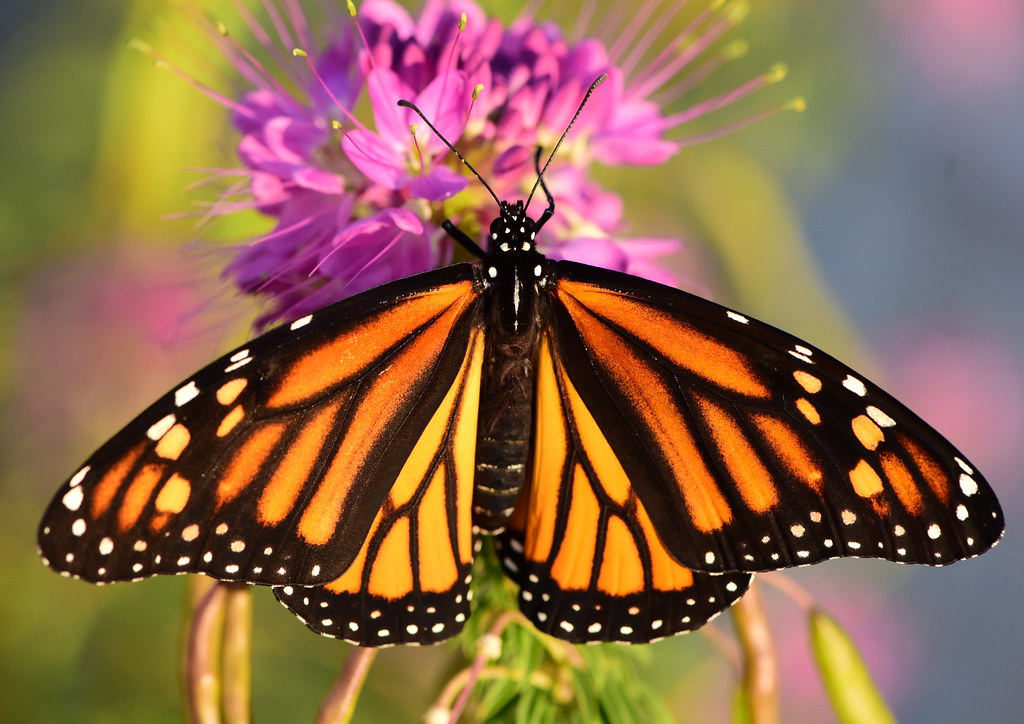
The Monarch butterfly has etymological roots steeped in ancient Greek mythology. The Monarch butterfly and Milkweed plant are similar in that they are both named after Greek gods. Do you know what they are?

Picture

What's in a name?

First, let's talk about common names. Common names are simply the names that are used by everyone but can differ regionally! Monarchs have other common names, including milkweed butterfly, common tiger, wanderer, and black-veined brown.

Latin names are generally used by scientists who want to be sure they are referring to the correct species. Latin names are binomial, meaning a two-part name. The first part is the Genus to which the species belongs and the second part is the species name.

Legend holds that Prince William of Orange (later King William III) was so adored by some early European settlers to North America that they bequeathed the name “Monarch” to our very orange and regal butterfly in his honor. 
Picture
Prince William of Orange (King William III)

Let's talk Latin! 

​Danaus plexippus (Monarch butterfly)

The monarch was originally described by Carl Linnaeus in his Systema Naturae of 1758 and placed in the genus Papilio. In 1780, Jan Krzysztof Kluk used the monarch as the type species for a new genus, Danaus. Although works published between at least 1883 and 1944 identified the species as Anosia plexippus, the genus name was merged into Danaus in 2005.

Danaus, a great-grandson of Zeus, was a mythical king, who founded Argos. Danaus had fifty daughters, the Danaides, who married the fifty sons of Danaus' twin brother, Aegyptus. In most versions of the myth, they were all ordered to kill their husbands on their wedding nights. All but one did this and they were condemned to spend eternity carrying water in a sieve or perforated device.
In the Metamorphoses, Ovid refers to the Danaides as the Belides after their grandfather Belus.


Robert Michael Pyle suggested Danaus is a masculinized version of Danaë, Danaus's great-great-granddaughter, to whom Zeus came as a shower of gold, which seemed to him a more appropriate source for the name of this butterfly. Afterall, the chrysalis of a monarch butterfly is gilded with gold!

Plexippus was one of the 50 sons of Aegyptus, the twin brother of Danaus, who was killed by one of Danaus' daughter, Amphicomone.
In Homeric Greek, his name means "one who urges on horses", i.e., "rider" or "charioteer" or​ "striker"

It isn't known why the Monarchs would be named after these particular Greek gods/goddesses. There are many interpretations and theories but we can't know for sure. 
Picture

What about milkweed?

Asclepias ​tuberosa (Butterfly Milkweed)

The genus was formally described by Carl Linnaeus in 1753, who named it after Asclepius, the Greek god associate with medicine and healing. This could be due to the many healing properties of Milkweed.  

Monarchs also use milkweed as medicine! According to research by University of Michigan researcher, Mark Hunter: "
In the wild, parasite-infected female monarch butterflies sometimes seek out milkweed plants with high toxin levels and lay their eggs there, a process known as trans-generational self-medication."
Tuberosa is mashup of the Greek polianthes, meaning “multi-flowered,” and the Latin tuberosa, which means “swollen root,” or tuber.

Members of the genus, Asclepias, produce some of the most complex flowers in the plant kingdom, comparable to orchids in complexity. Five petals reflex backwards revealing a gynostegium surrounded by a five-membrane corona. The corona is composed of a five-paired hood-and-horn structure with the hood acting as a sheath for the inner horn. They are an especially beautiful flower! 

Rod of Asclepias

In Greek mythology, the Rod of Asclepius, is a serpent-entwined rod wielded by the Greek god Asclepius. In modern times, it is the predominant symbol for medicine and health care, although it is sometimes confused with the similar caduceus, which has two snakes.
​
Picture
Asclepias holding his serpent-entwined staff

Resources

https://www.nps.gov/articles/netn-species-spotlight-monarch.htm#:~:text=Legend%20holds%20that%20Prince%20William,regal%20butterfly%20in%20his%20honor.

Asclepias tuberosa. https://en.wikipedia.org/wiki/Asclepias_tuberosa

https://www.worldwildlife.org/species/monarch-butterfly

Pyle, Robert. 2014. Chasing Monarchs: Migrating with the Butterflies of Passage
https://books.google.com/books?id=gO9eXQI0ZxQC&pg=PA148#v=onepage&q&f=false

Bitter pill: Monarchs, milkweed and self-medication in a changing world
https://news.umich.edu/bitter-pill-monarchs-milkweed-and-self-medication-in-a-changing-world/
47 Comments

    Author

    Rebecca Chandler
    Garden Educator, Naturalist and Ethnobotanist

    Picture

    Archives

    March 2024
    January 2024
    September 2023
    August 2023
    June 2023
    April 2023
    February 2023
    March 2021
    January 2021
    December 2020
    October 2020
    July 2020
    June 2020
    May 2020
    April 2020
    March 2020
    February 2020
    January 2020
    December 2019
    November 2019
    October 2019
    September 2019
    August 2019
    July 2019
    June 2019
    April 2019
    March 2019
    February 2019
    January 2019
    December 2018
    October 2018
    September 2018
    August 2018
    July 2018
    June 2018
    May 2018
    April 2018
    March 2018

    Categories

    All

    RSS Feed

NOTE: You can also receive FREE SEEDS by sending us a self-addressed stamped envelope to: 
​
Save Our Monarchs | P.O. Box 947 | Chanhassen, MN 55317
Please include a $5 donation with each request.
​
Get Seeds
Donate
Forum
Blog
Contact Us
Privacy
  • Monarch Story
    • Why Milkweed?
    • Monarch Migration
    • Help Us Expand
    • How To Raise Monarch Butterflies At Home
    • How You Can Help
    • Frequently Asked Questions
  • Get Seeds
    • Seed Packets
    • Bulk Seeds
  • Donate
    • School Classroom Program
    • Nebraska/SOM
    • Donate Stock
    • In Memoriam
    • In Honor
  • Store
    • Milkweed Seeds
    • Save Our Monarchs Gear
    • Gift Cards
    • CLEARANCE!
  • Schools
  • Habitat Projects
    • Corridors For Pollinators
  • About Us
    • Our Team
    • Our Partners
    • Testimonials
    • Irvin & Gladys
    • Contact Us
  • Blog